| |
Noise in Neonatal and NICU
- Remind staff and visitors to keep their noise down
- Reduce the harmful influence of high noise levels
- Helps to reduce stress levels in infants
- Unbiased view of the actual noise level
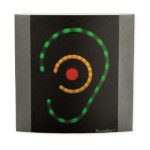
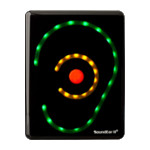
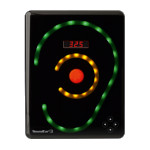
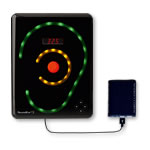
Most of the noise warning signs that NoiseMeters supplies
are for use in neonatal, and intensive care units. Babies
in intensive care are particularly sensitive to high noise
levels and to the increased stress that they cause.
Noise from visitors and staff is best dealt with using a
device such as the NoiseSign as it is not influenced by the
complicated human perception of noise. If it is loud, the
sign will light up, whoever is making the noise.

|
 |
Neonatal units, like most hospital environments,
tend to be very poor acoustically due hard, reflective surfaces.
Beds are often closely spaced, visitors can talk loudly (especially
the younger ones) and staff have to work quickly and move equipment
about. Add to this the incubators being opened and closed, occasional
tapping on the lid and items dropped accidentally and the noise
levels soon become unpleasant for the baby. One of the biggest
culprits is the alarm, which is clearly essential, but as the background
noise levels get higher the alarm has to be louder still. A quieter
background allows for quieter alarms.
Immediate Effects of NICU Noise
The immediate effects of noise in the neonatal unit are reasonably
clear. The baby's sleep is easily disturbed and sudden loud noises
(bangs on the incubator for example) can have a startling affect
on the heart rate and breathing patterns.
High and intermittent noise is also unpleasant and distracting
for both staff and parents. Defined "Quiet Times", when
noise and light levels are kept down, certainly help and are now
used in many units.
Long Term Effects of NICU Noise
The long term effects of noise in the NICU are not so obvious.
Hearing impairment as a result of exposure to high noise levels
can be expected but research over the last few years has also shown
a link with language development. This seems to be related to the
fact that a baby that goes full term is only exposed to lower frequency
noise (< 250 Hz) during the brain and sensory development stages.
Some such research can be found in the links below.
Useful Neonatal Noise Links
Johns
Hopkins eNeonatal Review
February 2006, Volume 3, Number 6 |
Interesting articles and informative commentary
on the acoustic environment of the NICU and particularly on
the development of the brain and sensory mechanisms. There
is evidence that unusual stimulation in the third trimester
of pre term babies, such as noise levels that are much higher
than they would have been in the uterus, can result in atypical
brain development. |
| |
|
Sound
Control for Improved Outcomes in Healthcare Settings [PDF
File]
The Center For Health Design |
A paper funded by the Robert Wood Johnson Foundation that
examines how different aspects of sound (noise, speech privacy,
speech intelligibility, and music) impact on patients and staff
in the healthcare setting. |
| |
|
Rutgers
University - [PDF file]
NICU Noise & Language Development |
An article entitled Neonatal Intensive Care Unit
Unit Noise & Language Development. A mother's
body attenuates most frequencies about 250 Hz, so the baby
is only exposed to low frequency noise. Pre term babies are
exposed to these higher frequencies and this could have an
influence in language development. Research carried out asks
parents about the acoustic environment of the NICU and compares
the results with the later language development. |
| |
|
Nursing
Spectrum
Noise Control |
A small article about noise and its effect on the patient.
It includes some obvious but often missed tips on how to reduce
the noise levels. |
| |
|
American
Academy of Pediatrics
Noise: A Hazard for the Fetus and Newborn |
Some information about the development hearing in the fetus
and the effects of noise on the newborn and premature baby. |
| |
|
|
|