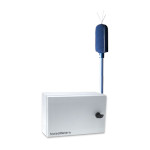
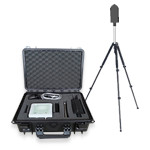
CR243/1 Noise Monitoring Terminal for Extreme Conditions
The CR243/1 Noise Monitoring Terminal has been designed
for use in areas with poor environmental conditions:
- Extremes of temperature
- Very high rainfall or humidity
- High levels of airborne chemicals
- High salt content close to heavy seas
Like the Noise Pole, but with higher levels of
protection, the CR243/1 Noise Monitor is ideal for the following
typical applications:
The CR243/1 meets the following acoustic and environmental
specifications:
- Class 1 to IEC 61672, Type 1 to IEC 60651 and IEC 60804
- Sealed and protected to IP66 standard
- Measurement range 20 to 140 dB(A) - single span
- Mounted on a folding mast
- Automatic noise event detection (e.g. aircraft)
- Multiple noise environment groups
- Integrated weather sensor option
- Connection via direct link, modem or GSM
|

CR243/1 Noise Monitoring Terminal |
Protection against the Environment
The acoustic processor, power supply, backup batteries and communications
equipment are mounted in two boxes at the bottom of the mast. These
boxes are sealed to IP66 and connected by armored conduit, which
passes inside the mast where possible for extra protection.
The Outdoor Microphone is mounted at the top of the mast. It is
designed to withstand harsh conditions with a maintenance interval
of between six months and one year depending on the environment.
The mast folds down for maintenance purposes.
For most environments the Noise Pole terminal
will be adequate, as well as being more cost effective and easier
to install. The CR243/1 is for more extreme environmental environments.
Noise Monitoring Functions
The CR243/1 noise monitoring terminal has a number of different
noise measurement stores, all running in parallel. The main measurement
stores are:
Noise Events - These are acoustic events such
as an aircraft flyby or train passing. The noise monitor can be
configured to detect such events based on the sound levels, duration,
rate of rise and fall, etc. Detected events are stored by date
and time along with acoustic parameters such as LAeq, LAmax, duration.
The Leq is also stored every second to provide a graph of the noise
event.
Noise Environments - These typically describe
the surrounding background noise around the site. All noise is
included in these measurements, but the Noise Events can
be removed, giving an impression of the environment without these
occurrences. Multiple Noise Environments run in parallel
with user selectable time periods. Parameters such as LAeq, Ln
(L10, L90, etc.) are stored. Time History - The "short Leq" is stored
every second, giving a detailed graph of the sound level over time
and allowing for more detailed analysis and reporting. |